Welcome to the Home Page of the Edgar Bainton (UK) Society
The purpose of this website is to spread awareness of Edgar Bainton's music
and to make it more widely known and available.
This site enables visitors to:
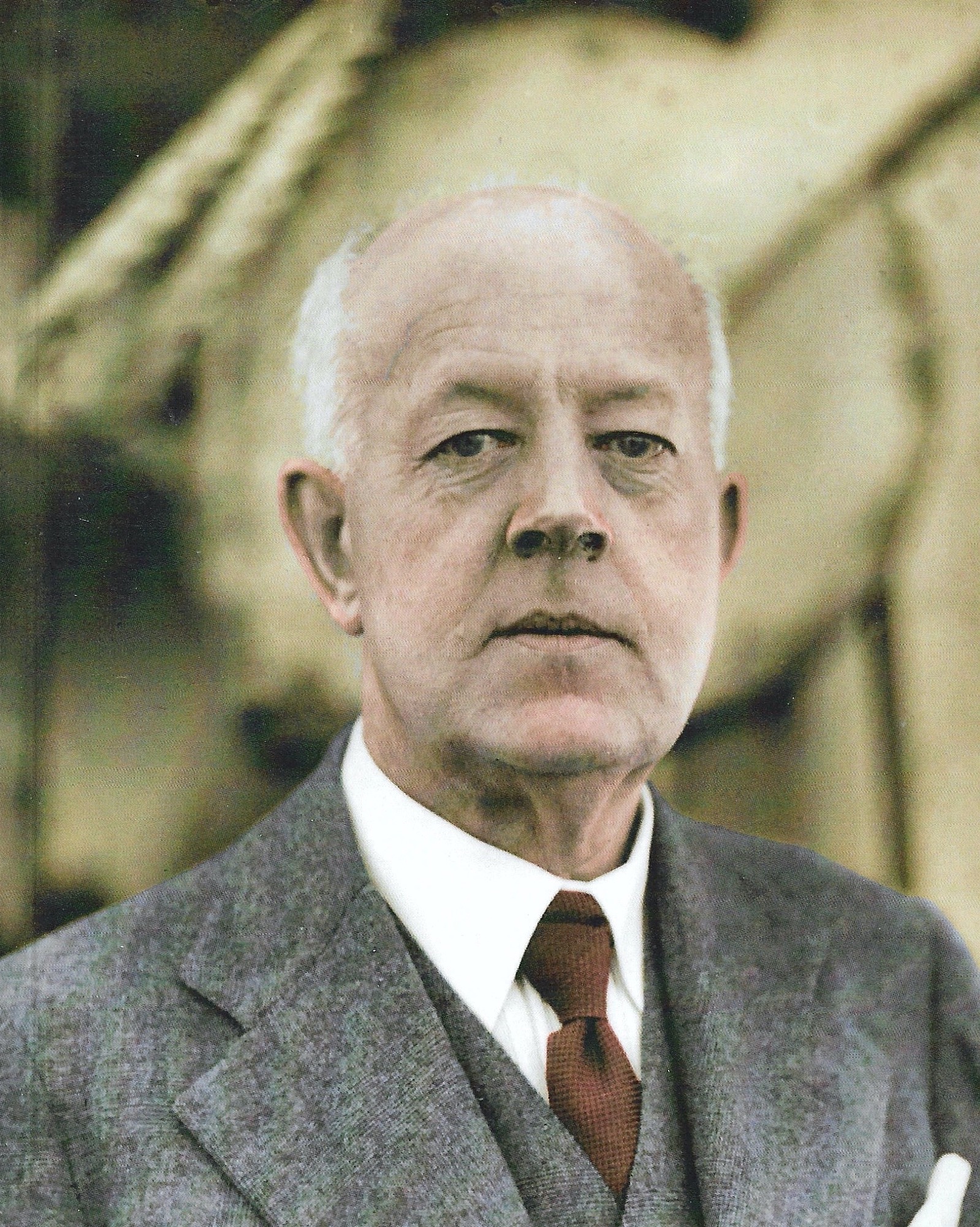
Edgar Leslie Bainton, Composer and Pianist (1880 -1956)
Edgar Leslie Bainton (ELB) was born in Hackney, London in 1880, but spent his early life in Coventry, where his father was a Congregational minister. He won a music scholarship to King Henry VIII Grammar School at eleven and (according to his daughter Helen) by the age sixteen, he knew from memory all of Bach's ‘48’. Still aged only sixteen, he won a place at the Royal College of Music (RCM), studying piano with Franklin Taylor and, later, composition with Sir Charles Villiers Stanford, winning medals for outstanding achievement. His RCM contemporaries included Frank Bridge, Rutland Boughton, Thomas Dunhill, George Dyson and John Ireland.
On leaving the RCM in 1901, ELB took up a post at the Newcastle-upon-Tyne Conservatoire of Music teaching piano and composition. That same year, Ethel Eales from Co. Durham enrolled at the Conservatoire to study piano, violin and singing. They married in 1905 with children, Guenda, born in 1906, and Helen in 1909.
In 1912, after several years of intense musical activity, ELB became Principal of an enlarged Newcastle Conservatoire based in Jesmond. Unfortunately, in 1914, he and Ethel were detained on the outbreak of the First World War as they travelled by train to Bayreuth Festival. Ethel was released to return to the UK but ELB remained in Ruhleben, a Berlin civilian prisoner-of-war camp, until 1918. Ethel continued teaching and managing the Conservatoire until ELB was repatriated.
After many years of teaching, composing and worldwide travelling as an examiner for the Associated Board of the Royal Schools of Music, ELB and his family emigrated to Australia in 1934 to enable him to take up his appointment as Director of the New South Wales Conservatorium, Sydney. He and his family remained in Australia until his death in 1956, by which time he was regarded as an Australian composer and his music and name in the UK were virtually forgotten.
His considerable output (see the list of Works) includes three symphonies, two operas, various orchestral works (including a Concerto Fantasia for Piano), piano solos, a string quartet, sonatas for cello and viola and many songs. Sadly, much that ELB composed while in Ruhleben did not survive the end of the War.
Click here to read a fuller biography, Edgar Bainton, Musical and Spiritual Traveller, by Trustee Michael Jones.