Edgar Bainton
Discography
Hover over a CD to see a larger image, together with the tracklist
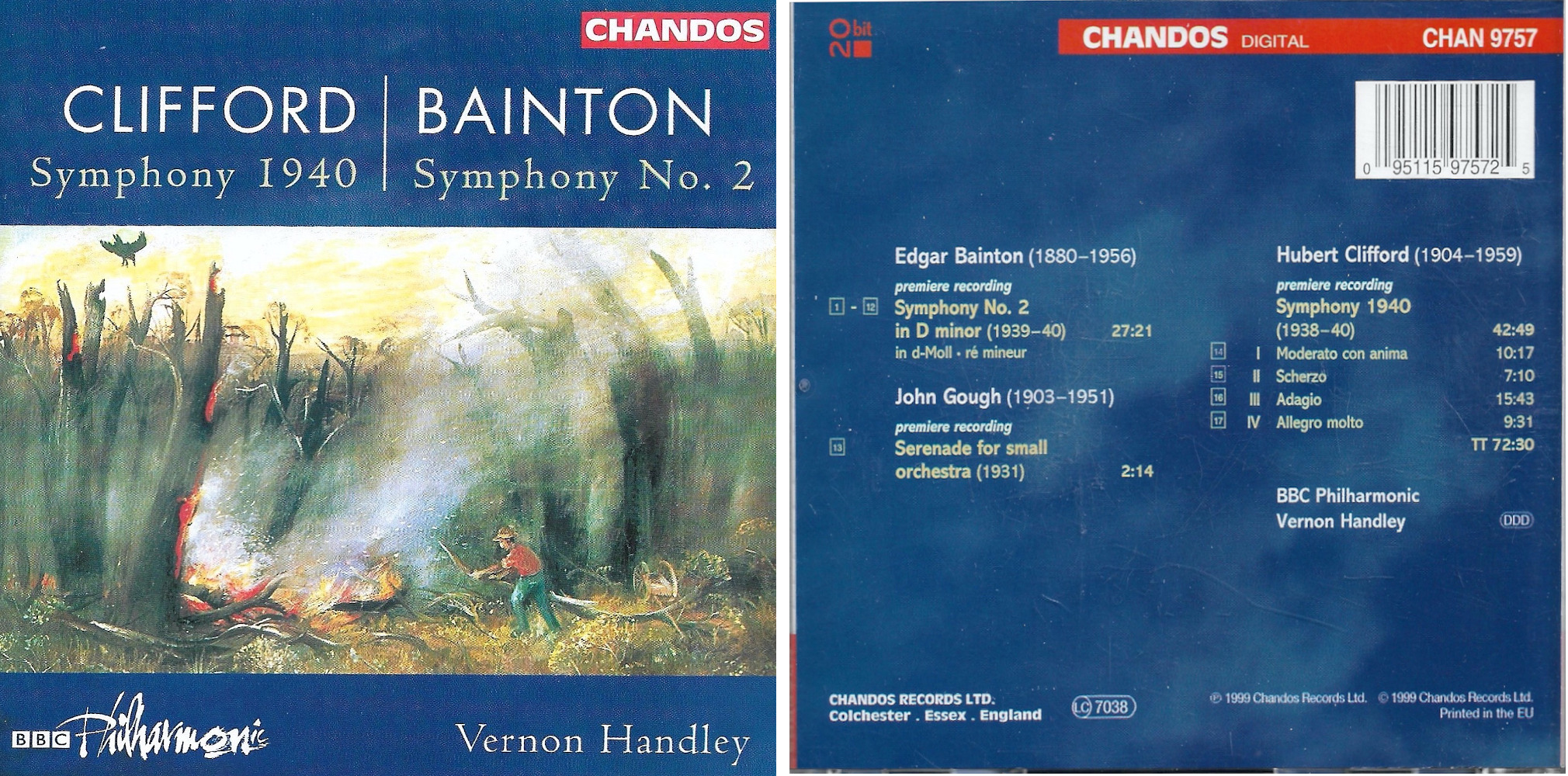
Clifford, Bainton Symphonies (1999)
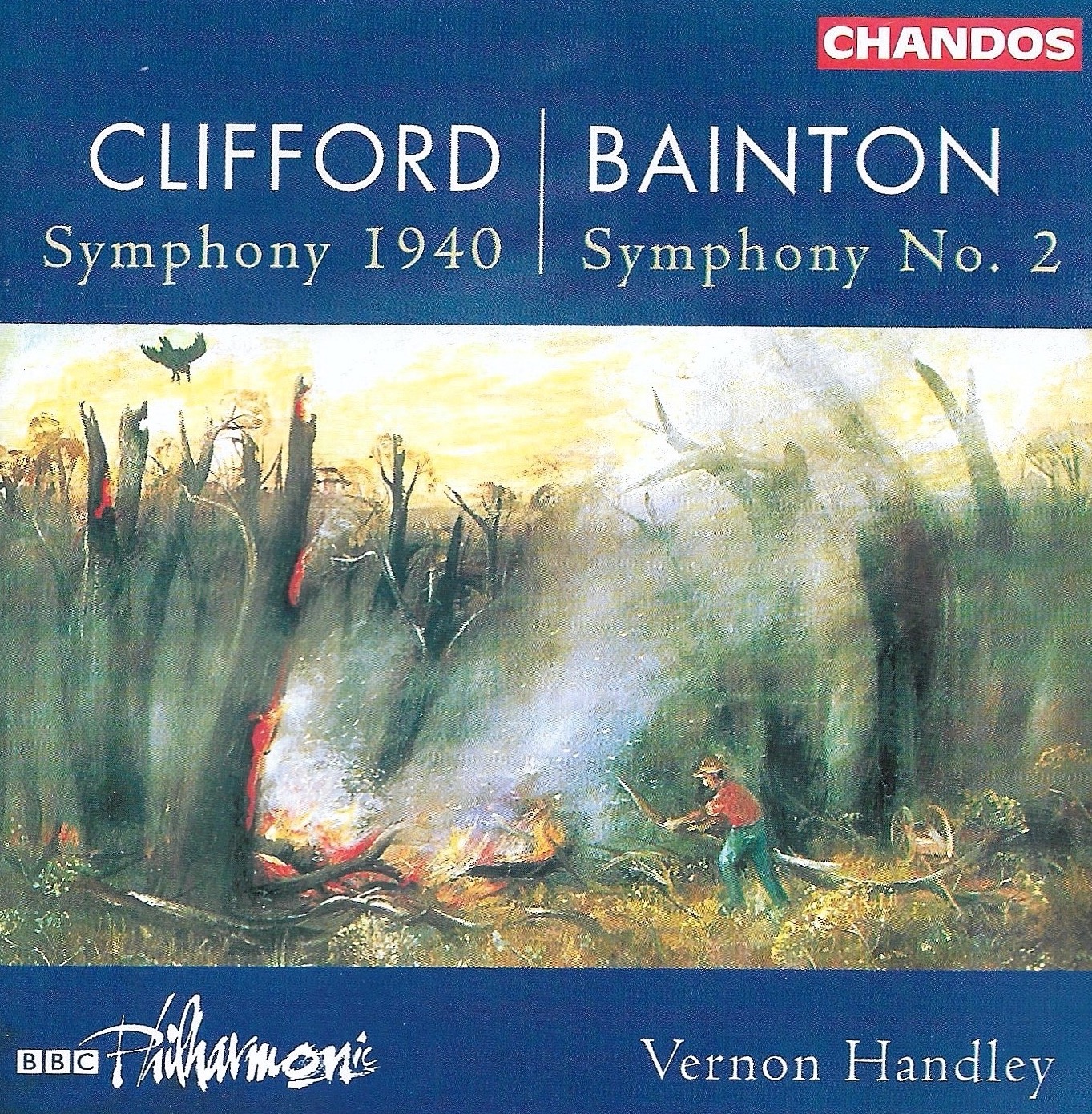
Symphony no 2 in D minor 1939-1940
with the BBC Philharmonic Orchestra conducted by Vernon
Handley on the Chandos label. Vol 1. CHAN9757
York Bowen, Frederic Austin, Edgar Bainton (2001)
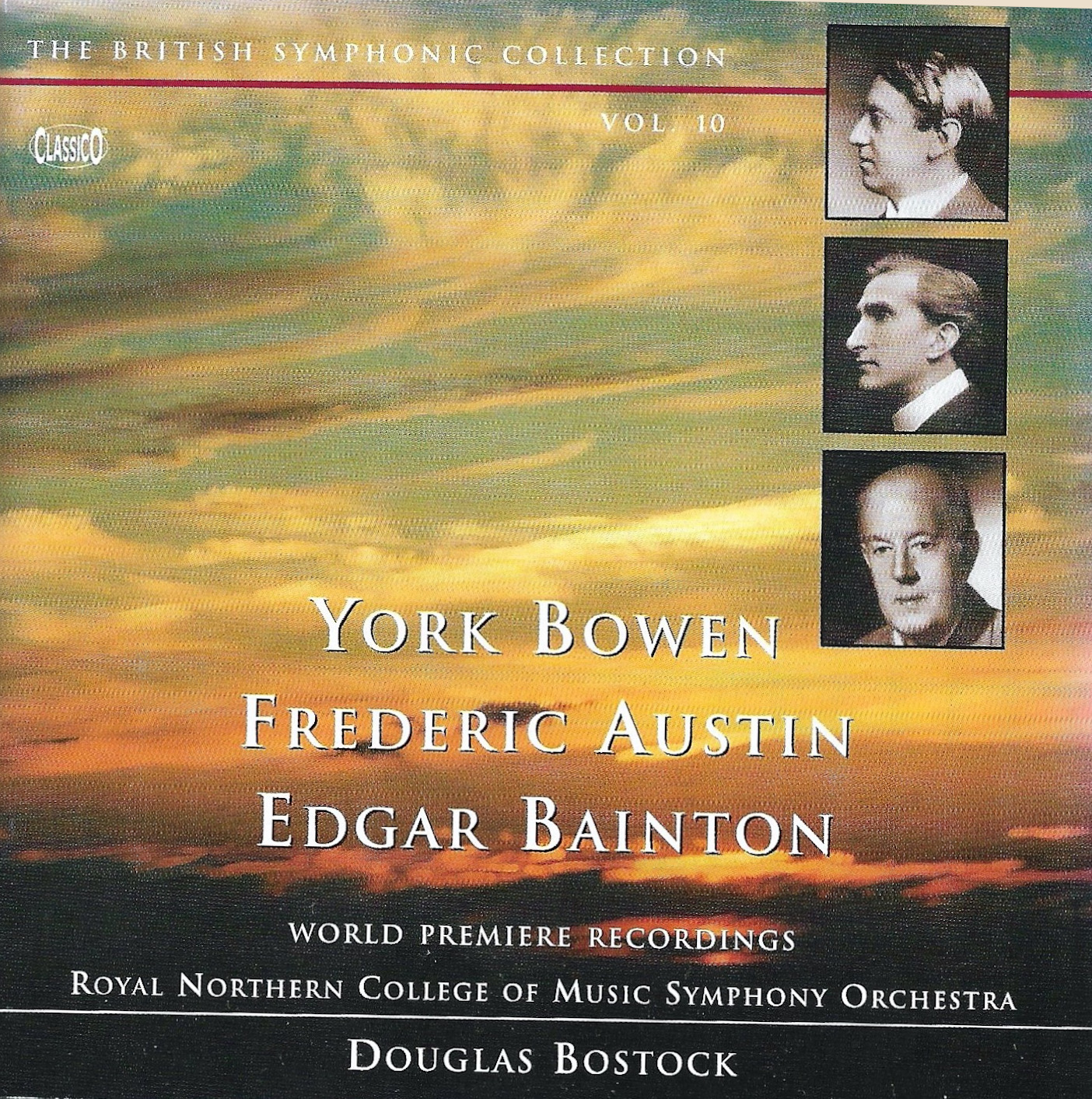
“Genesis” (1st movement of Symphony no 1 ‘Before Sunrise’ for Contralto solo, chorus and orchestra)
with the Royal Northern College of Music conducted by Douglas Bostock on the Classico label.
Part of a series entitled The British Symphonic Collection. CLASSCD404
The BBC also made a studio cd of this with Barry Wordsworth
and the BBC Concert Orchestra.
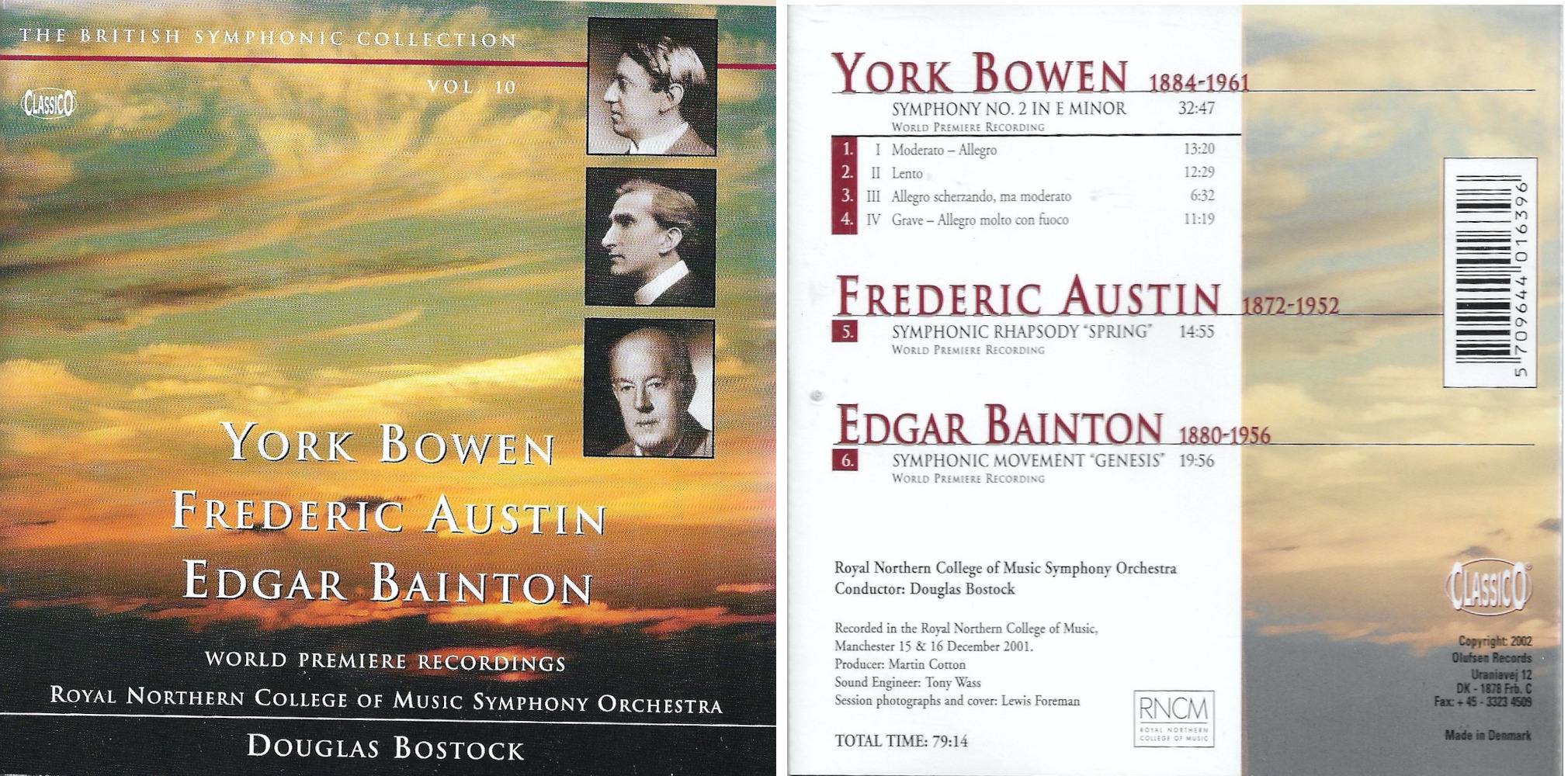
Clifford, Bainton Volume 2 (2003)
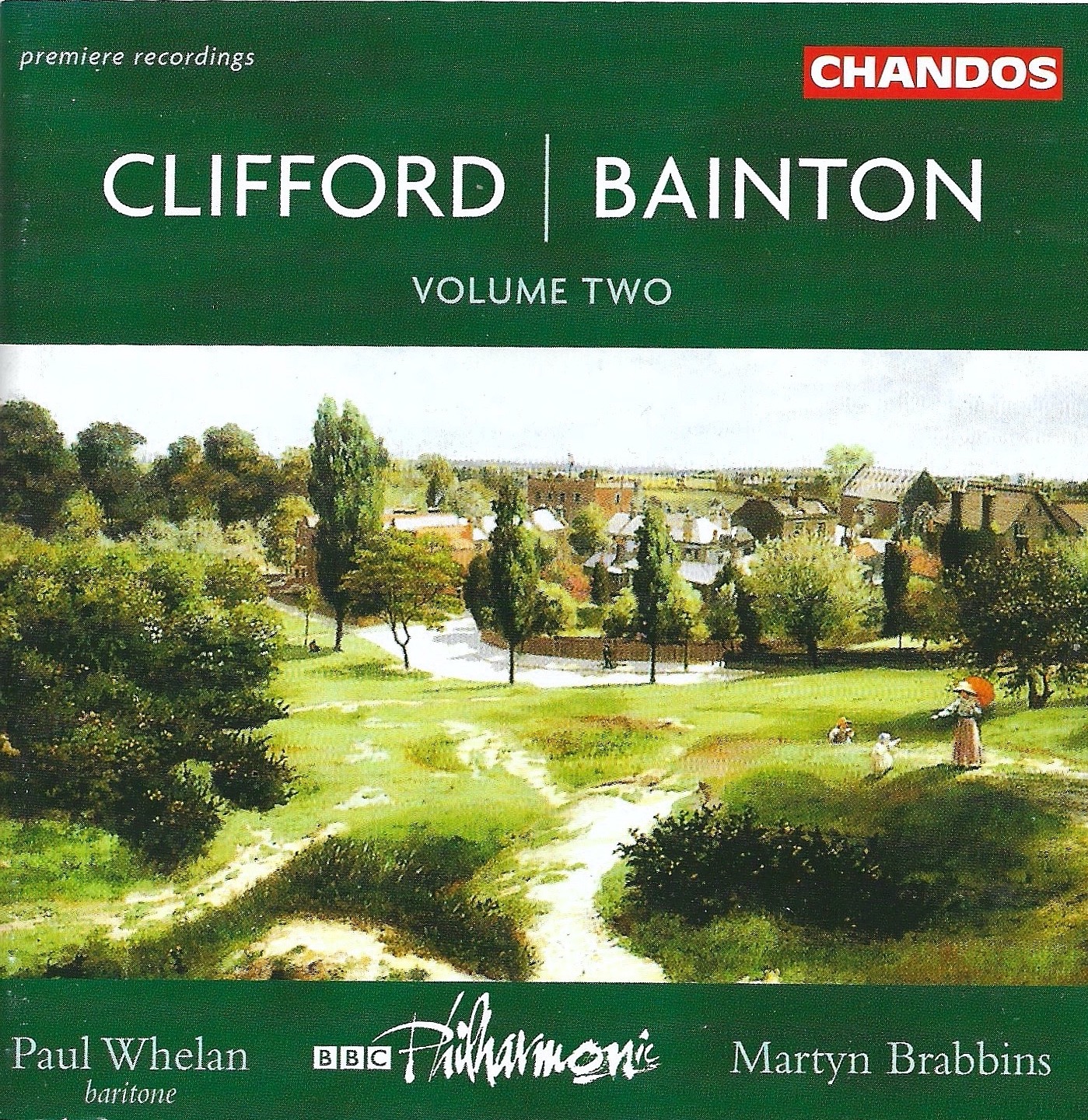
“Epithalamion” and the ‘English Idyll’
with the BBC Philharmonic Orchestra conducted by Vernon Handley
on the Chandos label Vol 2. CHAN10019
This cd was Disc of the Week on CD Review.
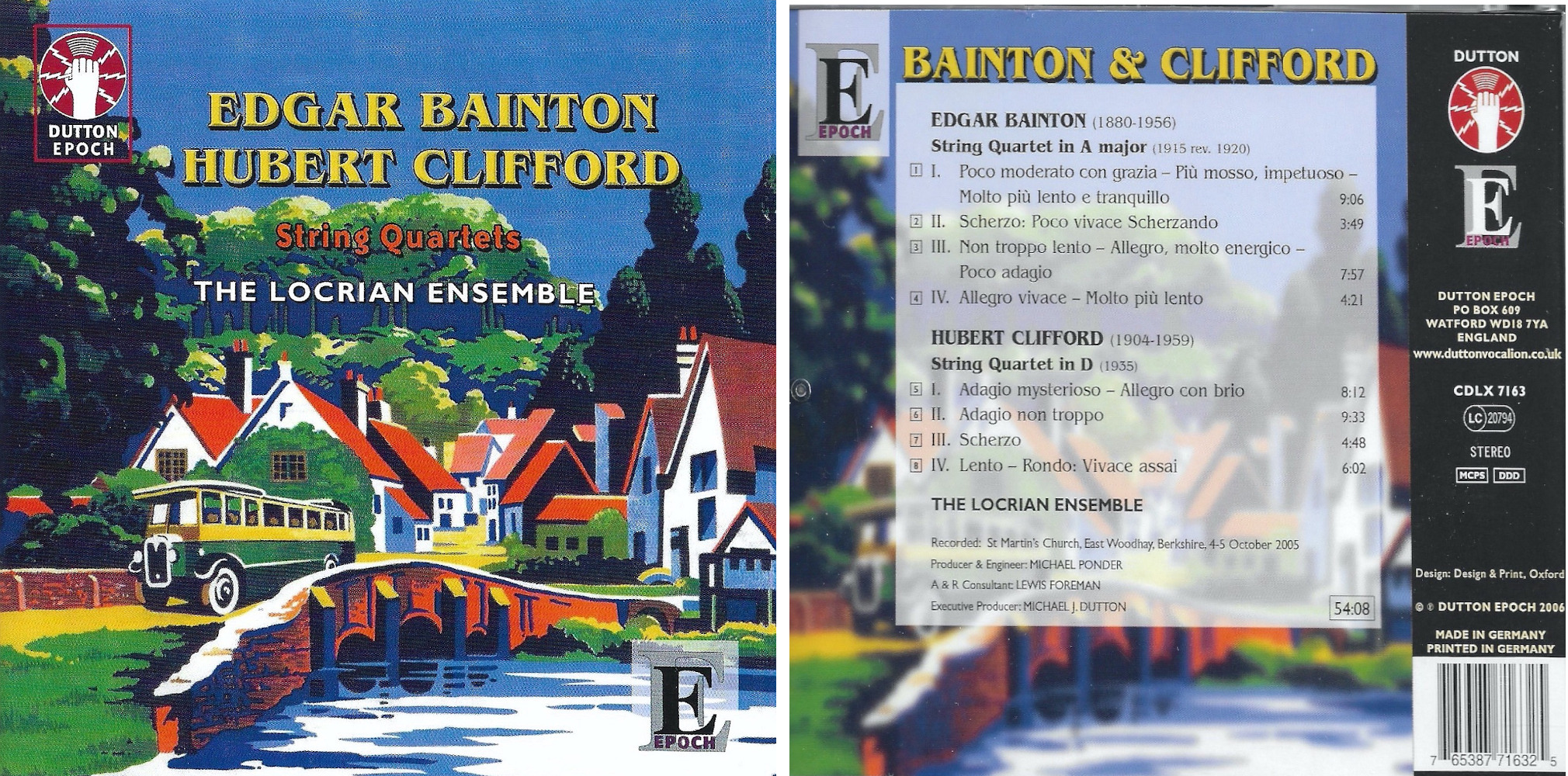
Bainton, Clifford String Quartets (2005)
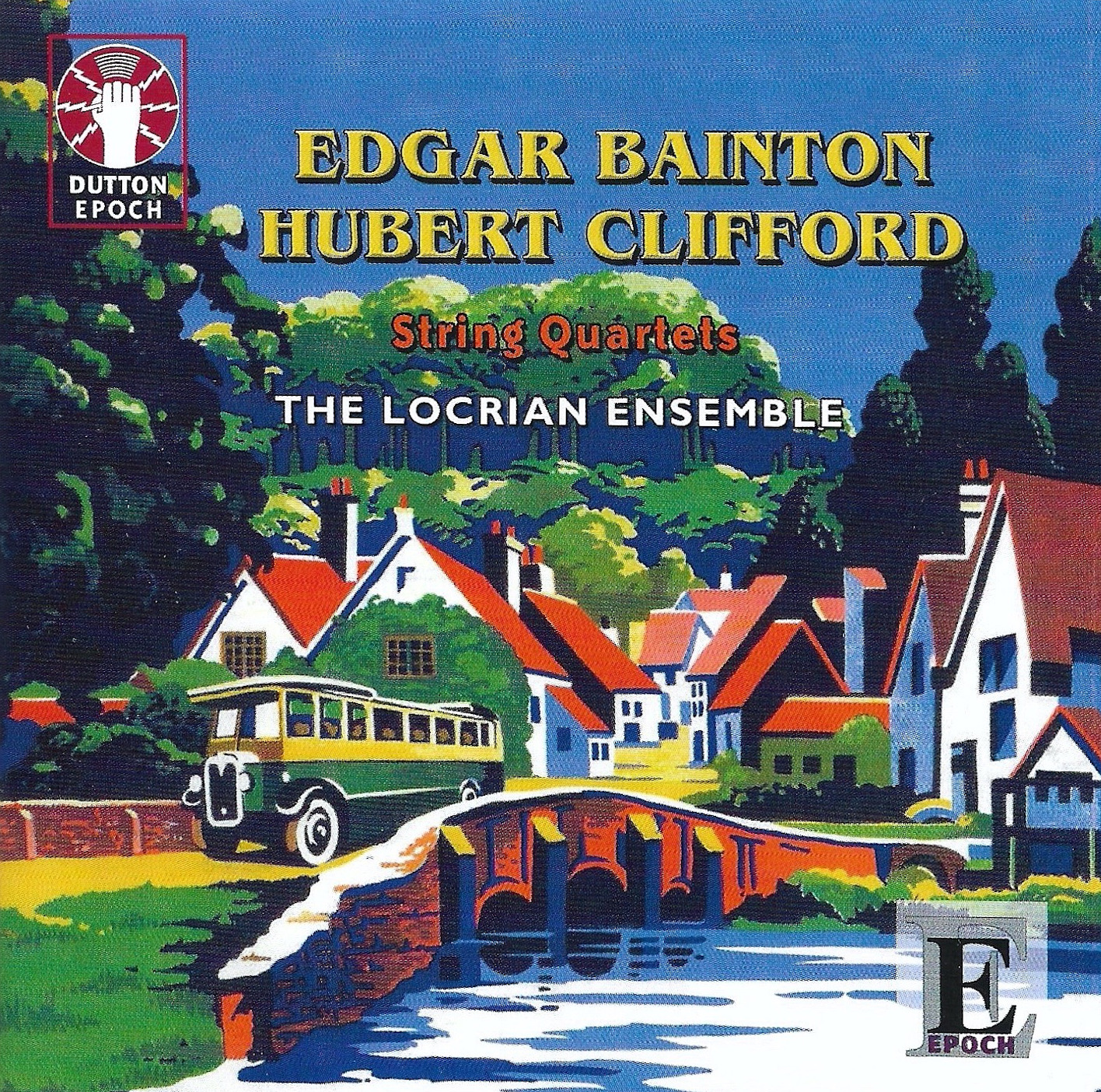
String Quartet in A major (1915/1920), performed by the Locrian Ensemble
Released in Feb 2006 on the Dutton Epoch label, CDLX 7163. Well reviewed in Gramophone.
This was composed in the Ruhleben civilian camp where Bainton was interned with other British
musicians (including Carl Fuchs, the leading cello of the Halle Orchestra) who found themselves
stranded in Germany while en route to Bayreuth at the outbreak of the First World War.
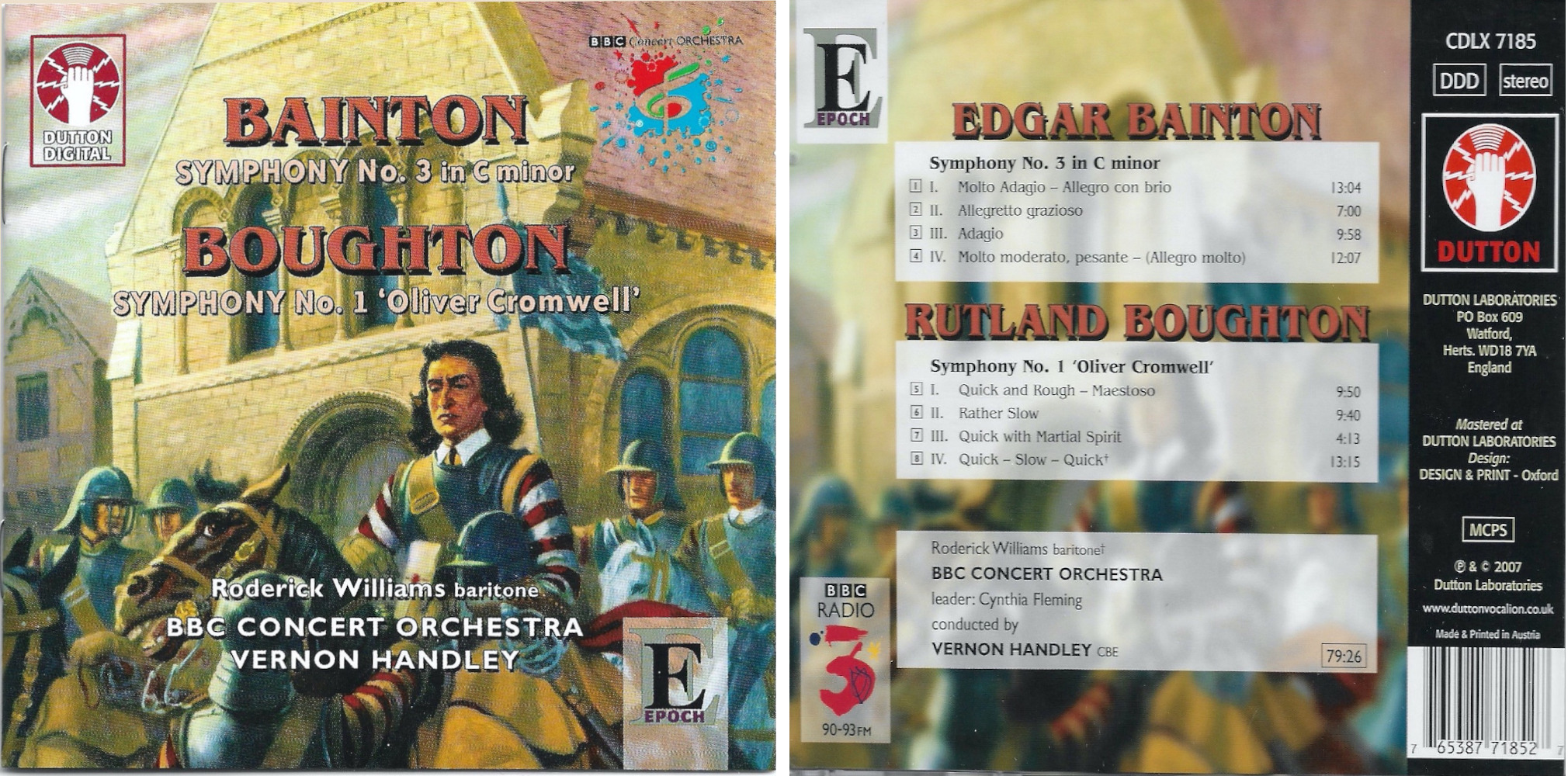
Bainton, Boughton Symphonies (2007)
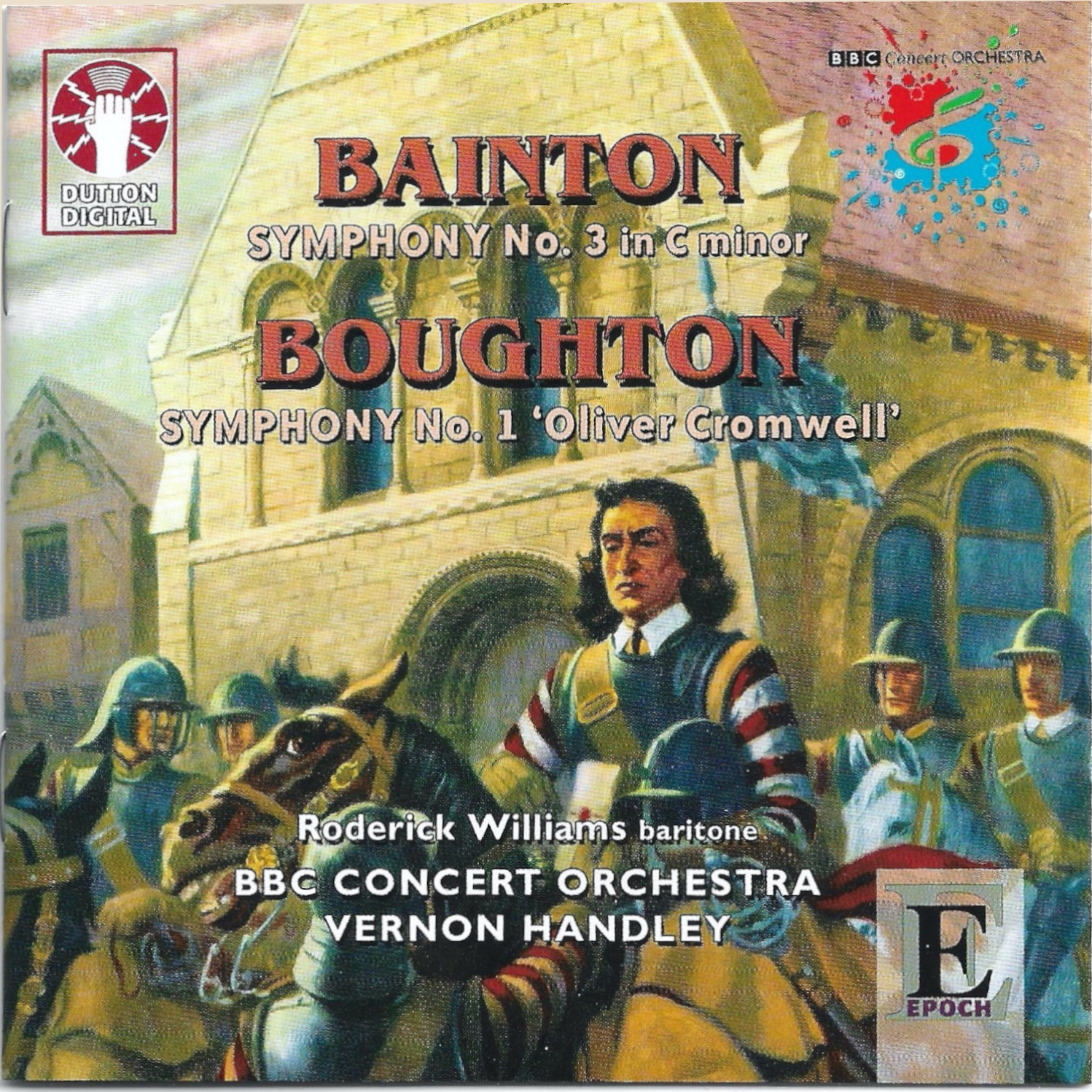
Symphony No 3 in C Minor
with Roderick Williams and the BBC Concert Orchestra conducted by Vernon Handley.
Released in 2007 on the Dutton Epoch label, CDLX 7185
Edgar Bainton (2008)
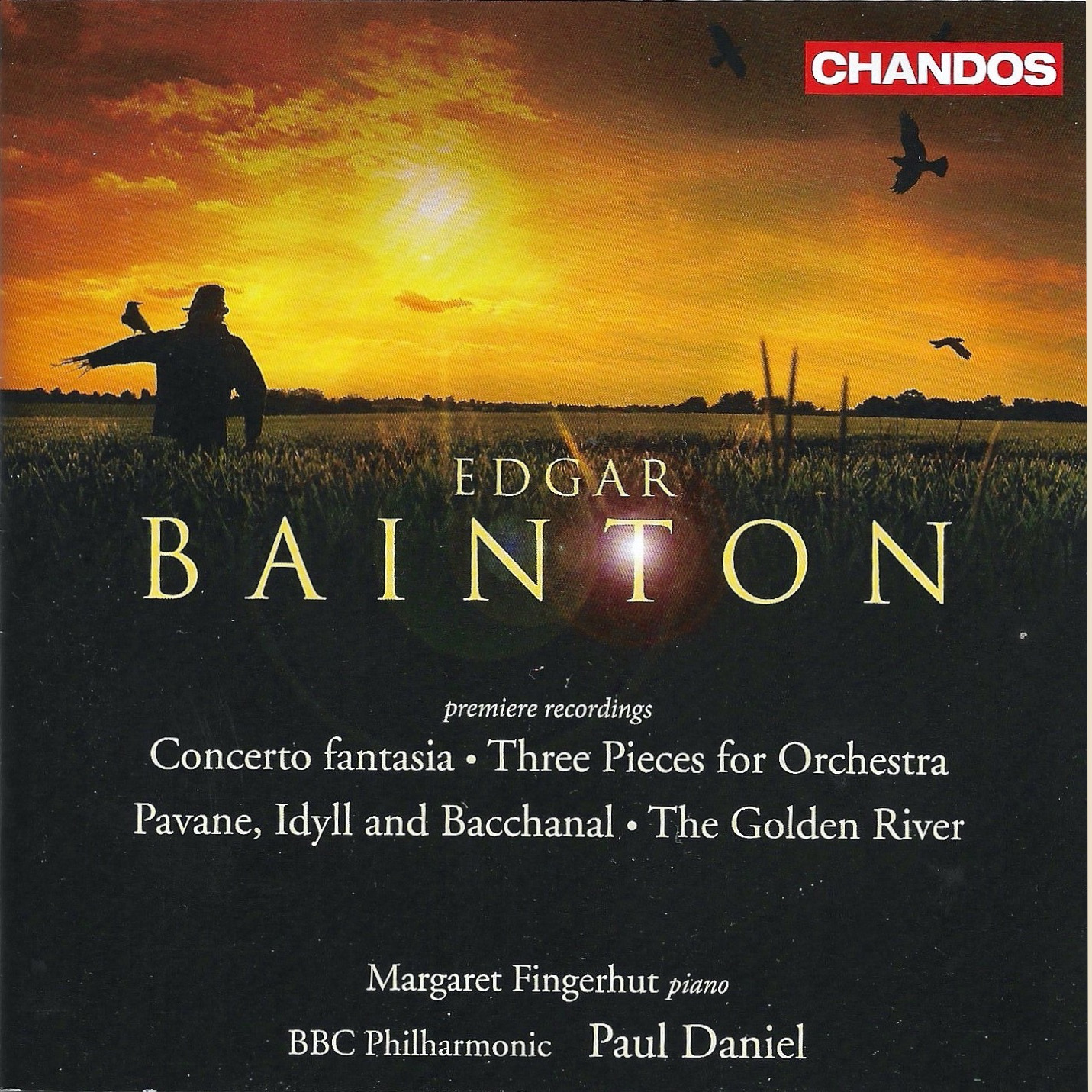
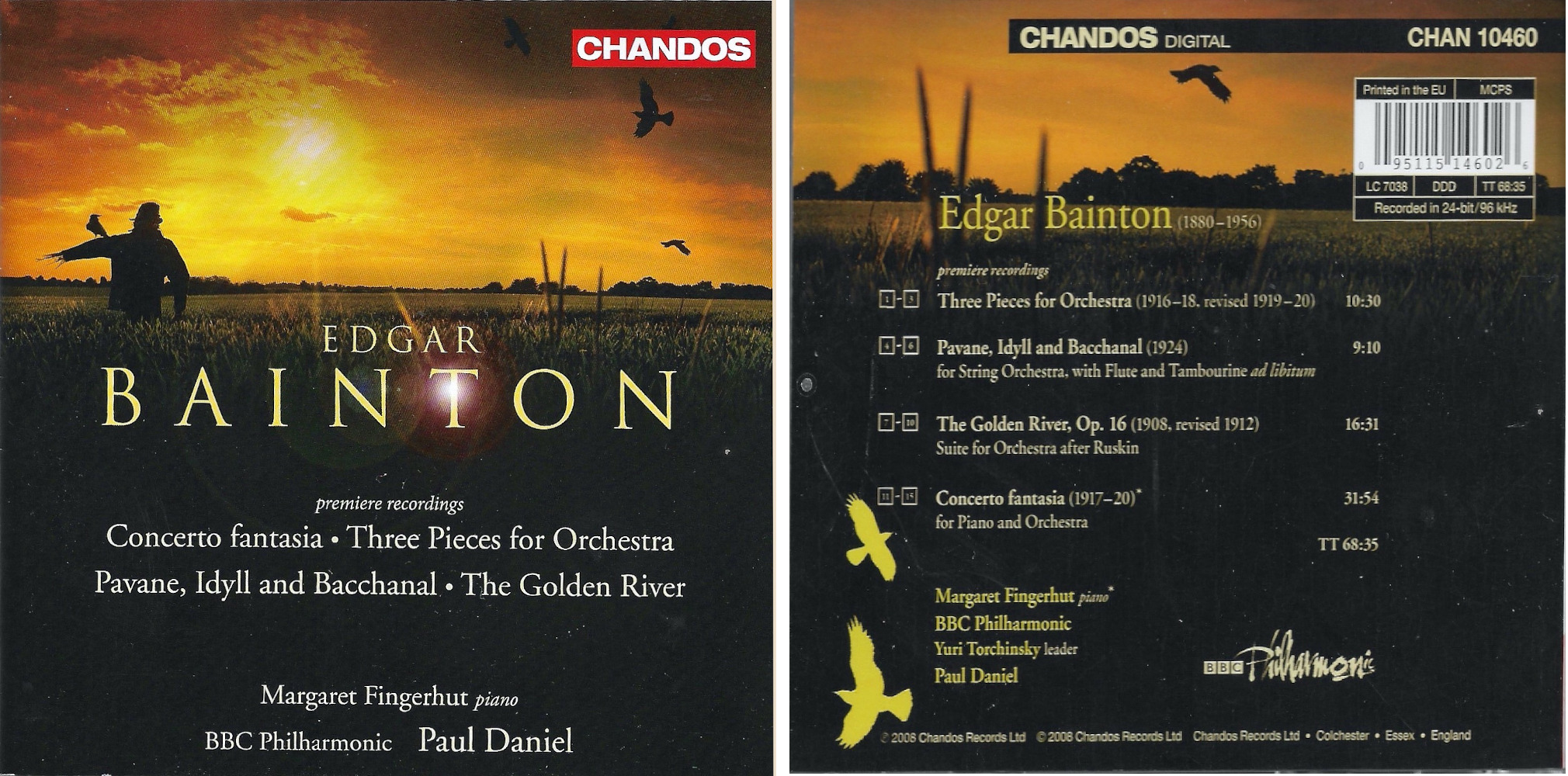
Piano Concerto Fantasia, Golden River, Three pieces for orchestra, Pavane, Idyll & Bacchanal
with Margaret Fingerhut (piano) and Yuri Torchinsky (violin)
and the BBC Philharmonic Orchestra conducted by Paul Daniel.
Released in 2008 on Chandos 10460.
(click a second time to hide the review)
“Fascinating music brought back from the groves of oblivion.”
Chandos has done well by Bainton. There are already two discs including a splendidly life-enhancing cd of the Second Symphony (CHAN9757). The visionary-rhetorical Third Symphony has been recorded by Dutton and the Genesis movement from the First Symphony is on Classico.
Here we start with two three movement orchestral suites. The Three Pieces reshuffle some music Bainton wrote during his internment at Ruhleben camp: 1914-1918. The end result is three movements of Arden-like pastoral pleasantry. This is the lighter Bainton but not as light as say Coates. This is music both gently magical and bluffly celebratory - a touch of Korngold in the last piece. The Pavane is Tchaikovskian and balletic yet with a touch of Binge about it. The Idyll is rather Debussian - the faun here being a flaneur rather than a voluptuary. The Bacchanal has the bluff exterior of a Holst suite, Brook Green or St Paul's or indeed of RVW's Concerto Grosso.
The earliest item here is the four movement suite from The Golden River. This is redolent of Massenet suites and Tchaikovsky's minor tone poems such as Hamlet or The Tempest with a whiff of Elgar's cigar smoke in the Little Gluck movement. A chattering Mendelssohnian King of the Golden River movement flitters and flashes along at speed. A real weight of utterance can however be felt in the lush sway and summery heaviness of The Golden River movement which rises to an almost Baxian climactic at 4:51.
The Concerto-Fantasia - a work of staggering originality in comparison to the other pieces here was begun in Ruhleben camp in 1917 and finished in 1920. It is in four movements and an epilogue. The long first movement is almost half the length of the whole work. It begins with the piano solo in wreathes of smiling cadenza-like flurries of crystalline notes. The redolences are of Bax's contemporaneous and statuesquely static Symphonic Variations and the similarly coeval Scott First Concerto. It also recalls Dukas's sense of fantasy and Scriabin's Piano Concerto yet has plenty of movement including an impudently Elgarian rhythmic grit which carries over into the Scherzo. The finale reminded me a little of John Ireland but with more emotional muscle and virility.
Paul Daniel, Margaret Fingerhut, the BBC Phil and Chandos have literally done the honours here and these four premiere cds inestimably enhance the Bainton catalogue. The notes are by Michael Jones (who has written an article on Bainton for Musicweb) whose personally costly dedication to the Bainton cause has been as richly rewarded as are the fortunes of the listener who encounters this fascinating music brought back to us from the groves of oblivion.
Rob Barnett, MusicWeb International, 2008
Music for Cello and Piano (2009)
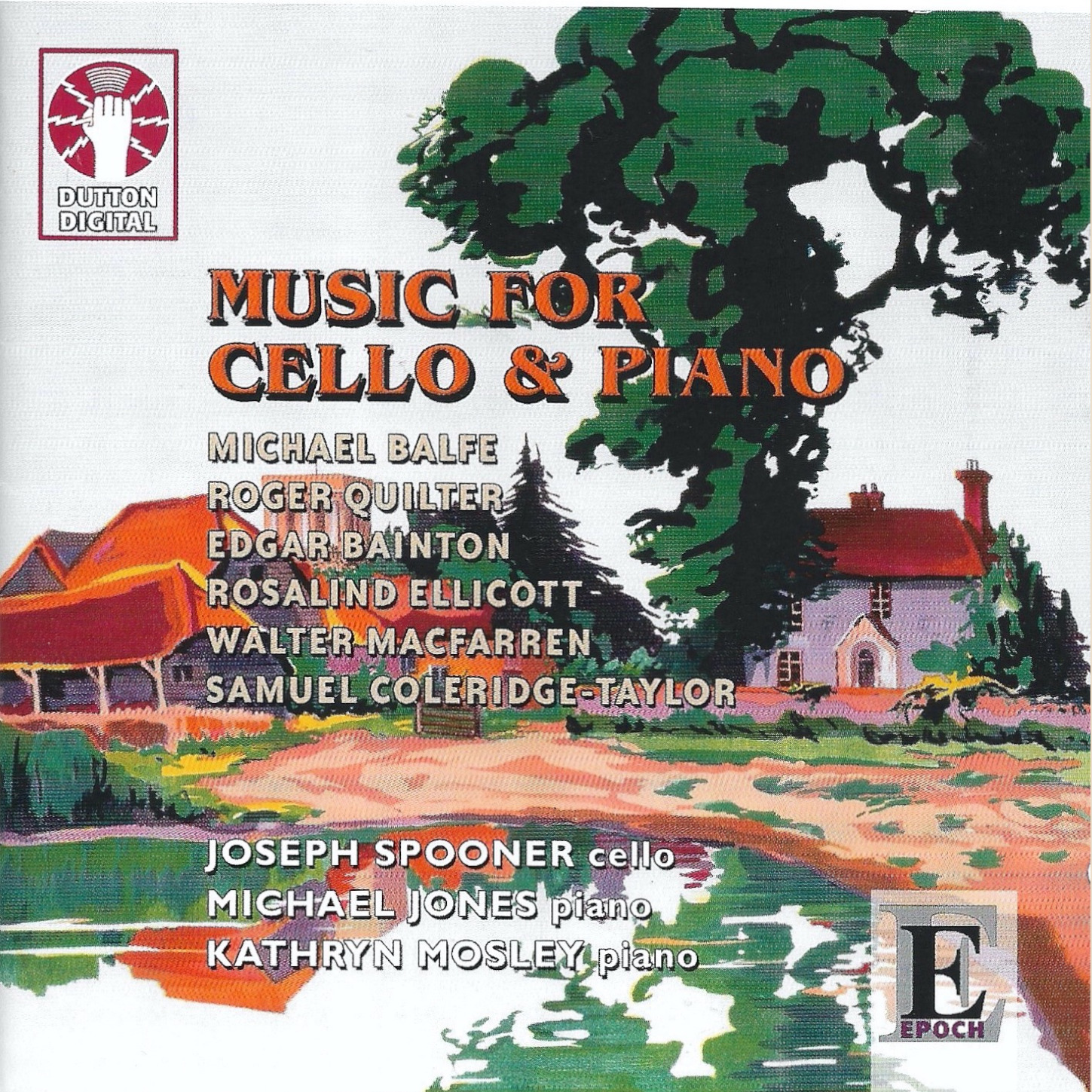
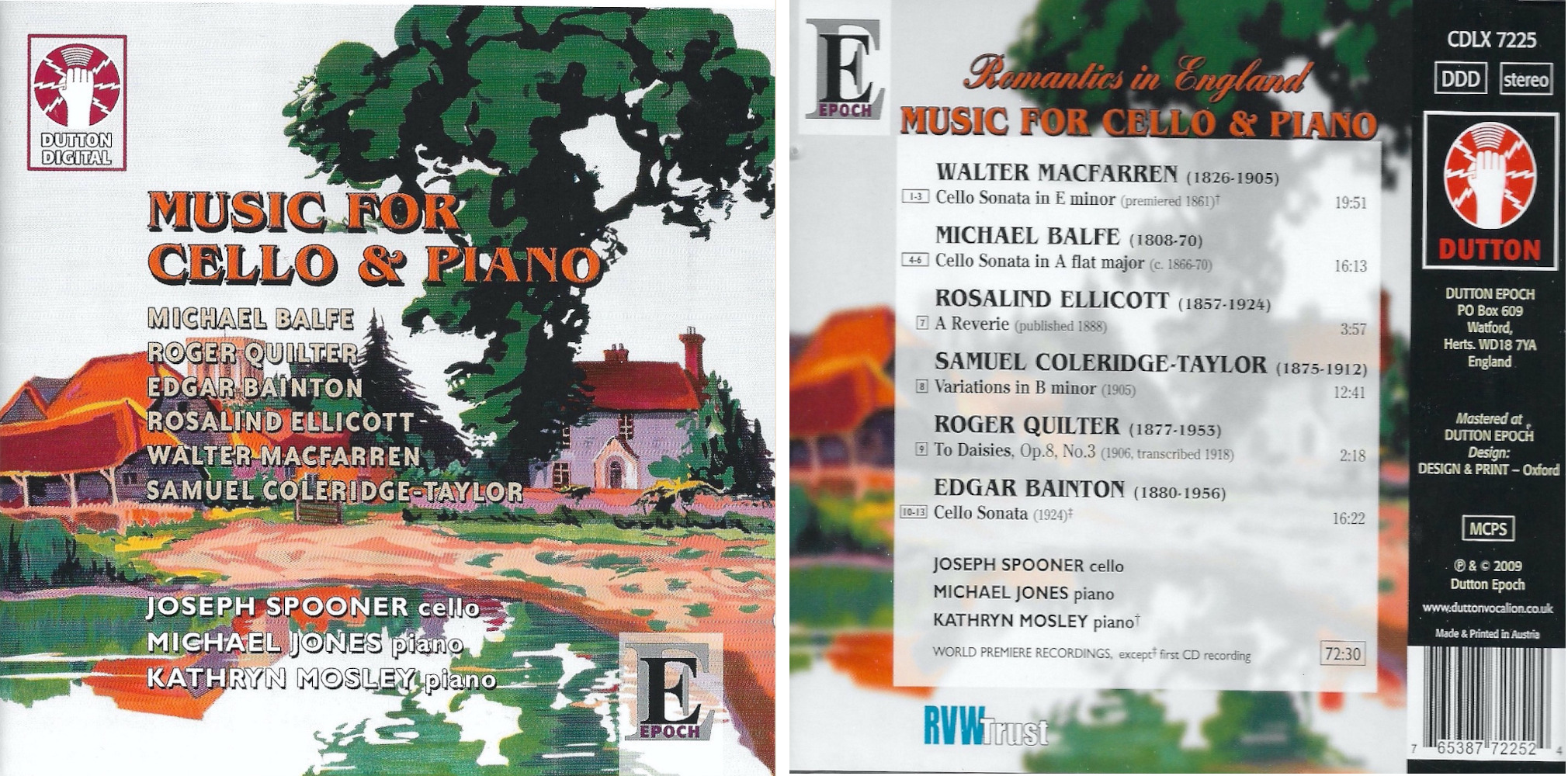
Cello Sonata
with John Kennedy on cello and Edgar Bainton himself on piano
This is a cd of the National Archive of Australia LOX811/2, recently remastered onto CD.
Michael Jones has copies of this (01384 393 706)
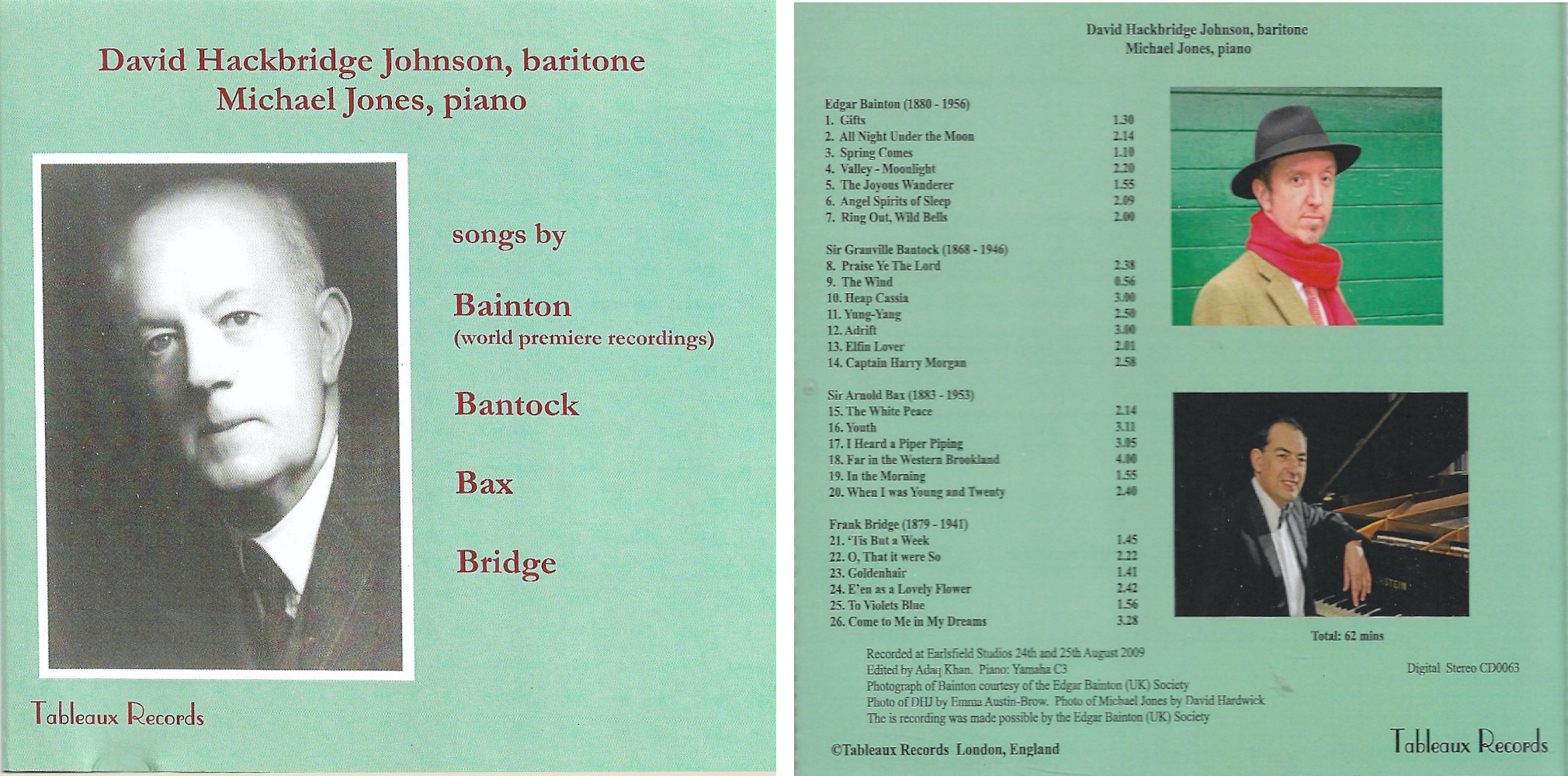
Songs by Bainton, Bantock, Bax, Bridge (2009)
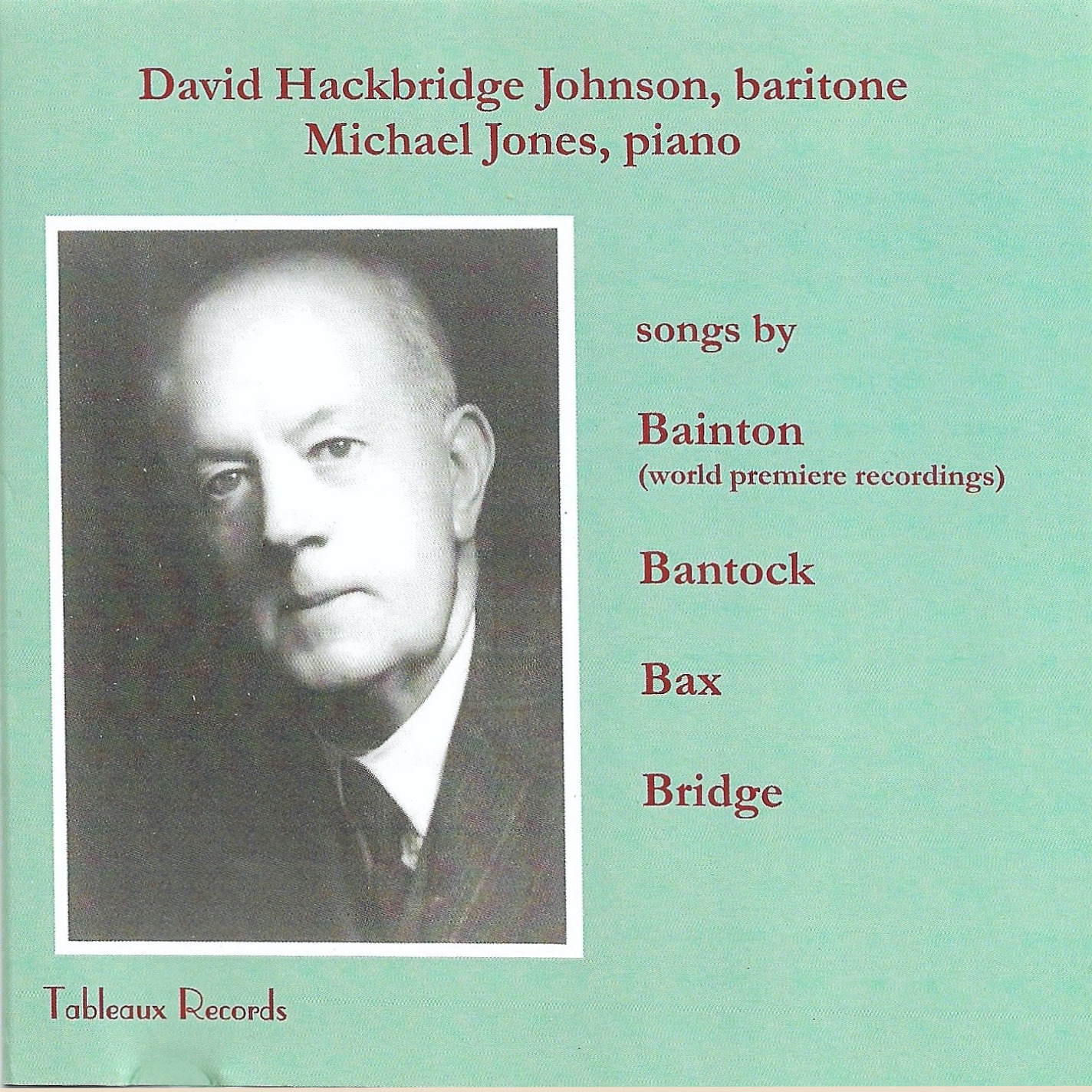
Seven songs for baritone and piano
with David Hackbridge Johnson (baritone) and Michael Jones (piano)
Released in 2011 on Tableaux Records
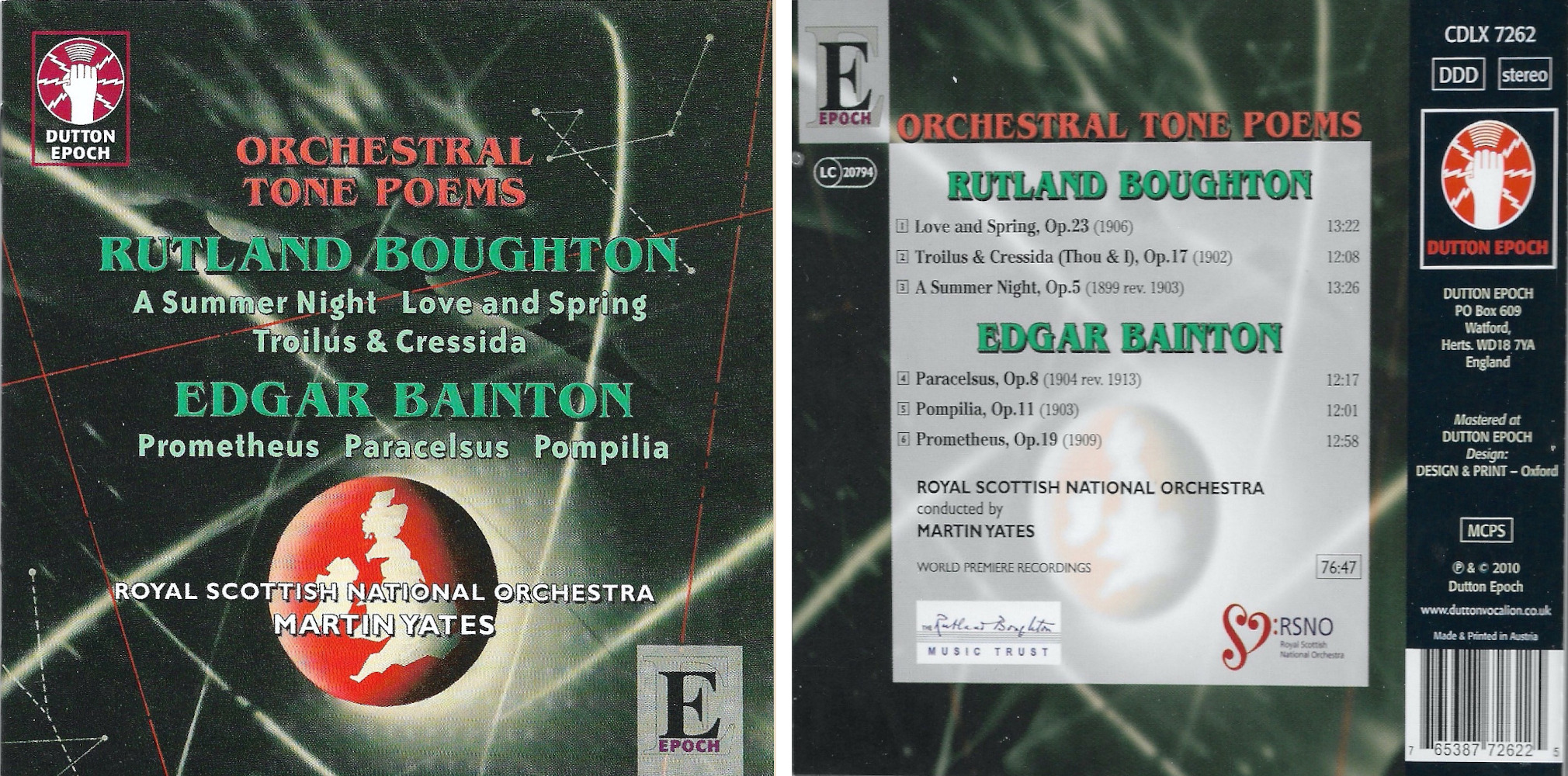
Orchestral Tone Poems (2010)
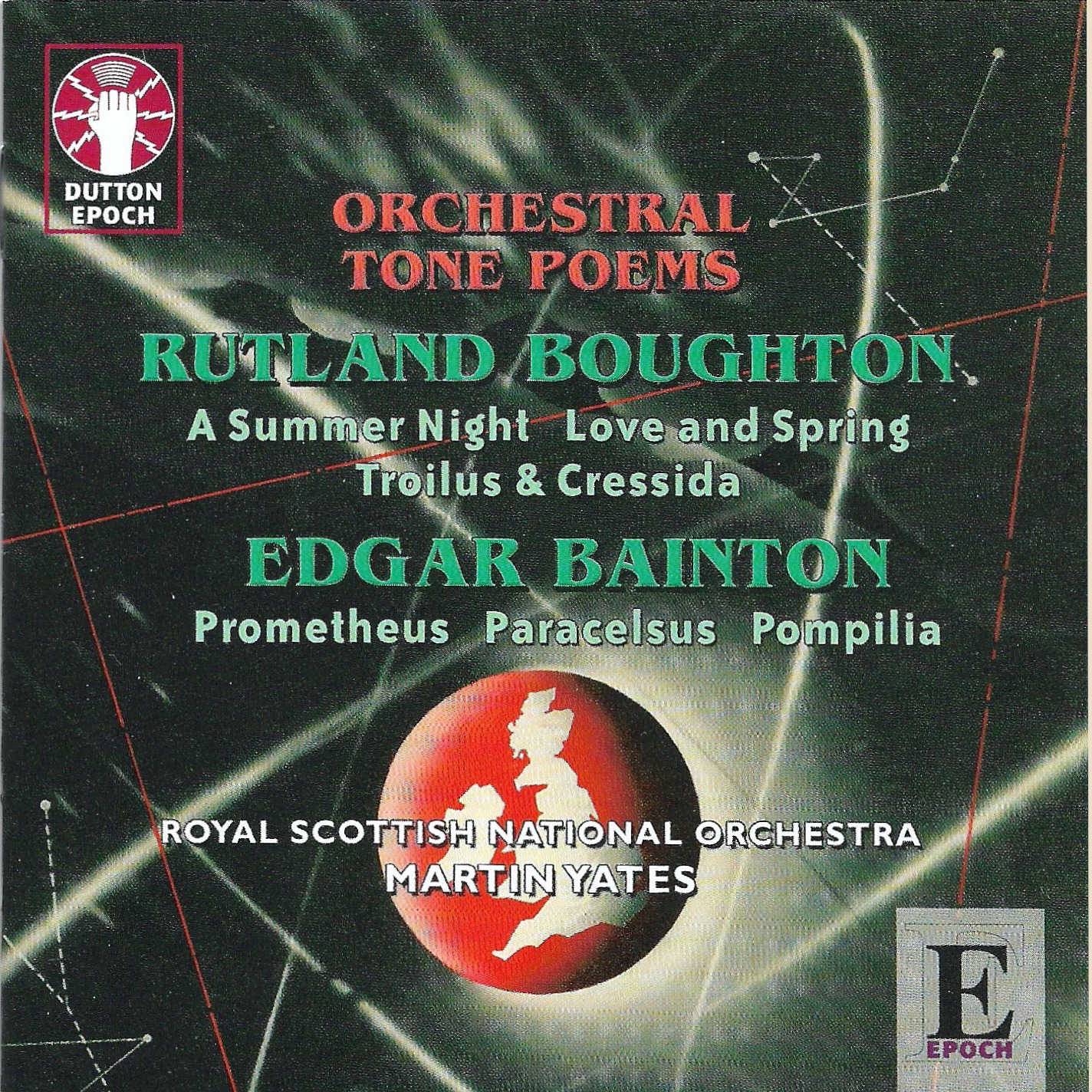
Orchestral Tone Poems: Paracelsus op 8, Pompilia op 11, Prometheus op 19
with the Royal Scottish Natiomnal Orchestra conducted by Martin Yates
Released in 2010 on Dutton CDLX 7262
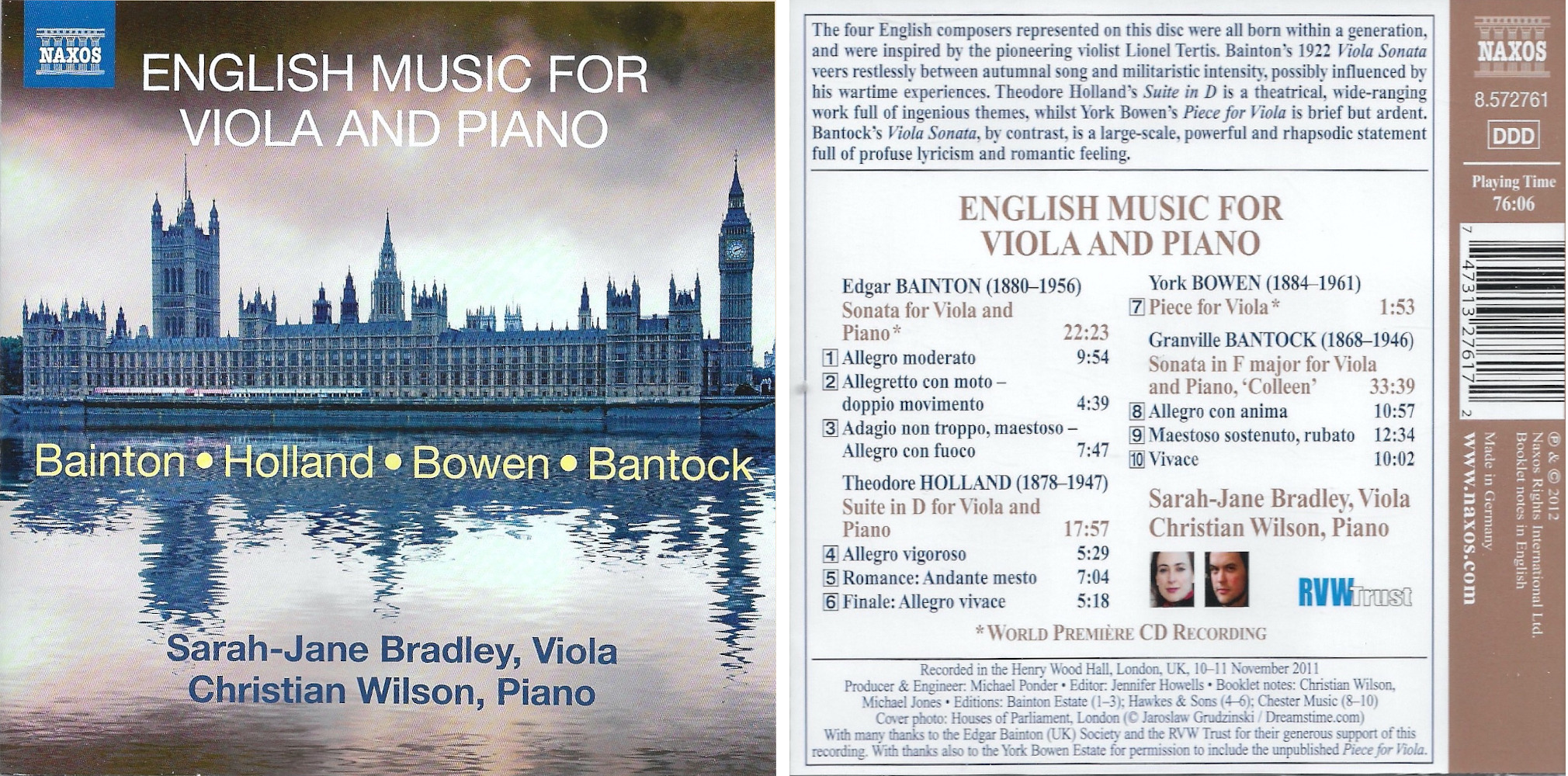
English Music for Viola and Piano (2011)
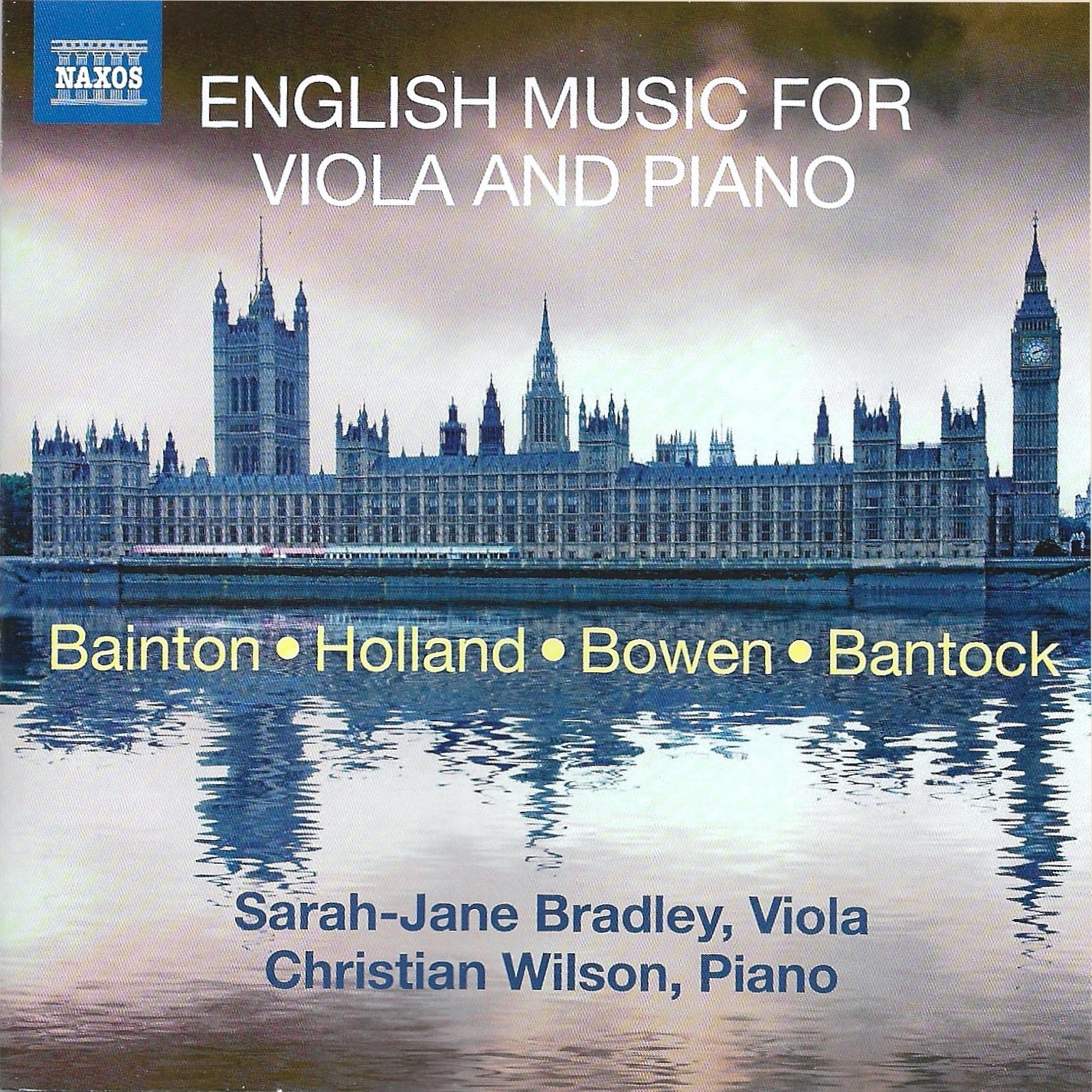
Sonata for Viola and Piano
with Sarah-Jane Bradley (viola) and Christian Wilson (piano)
Released in 2012 on Naxos, 8.572761
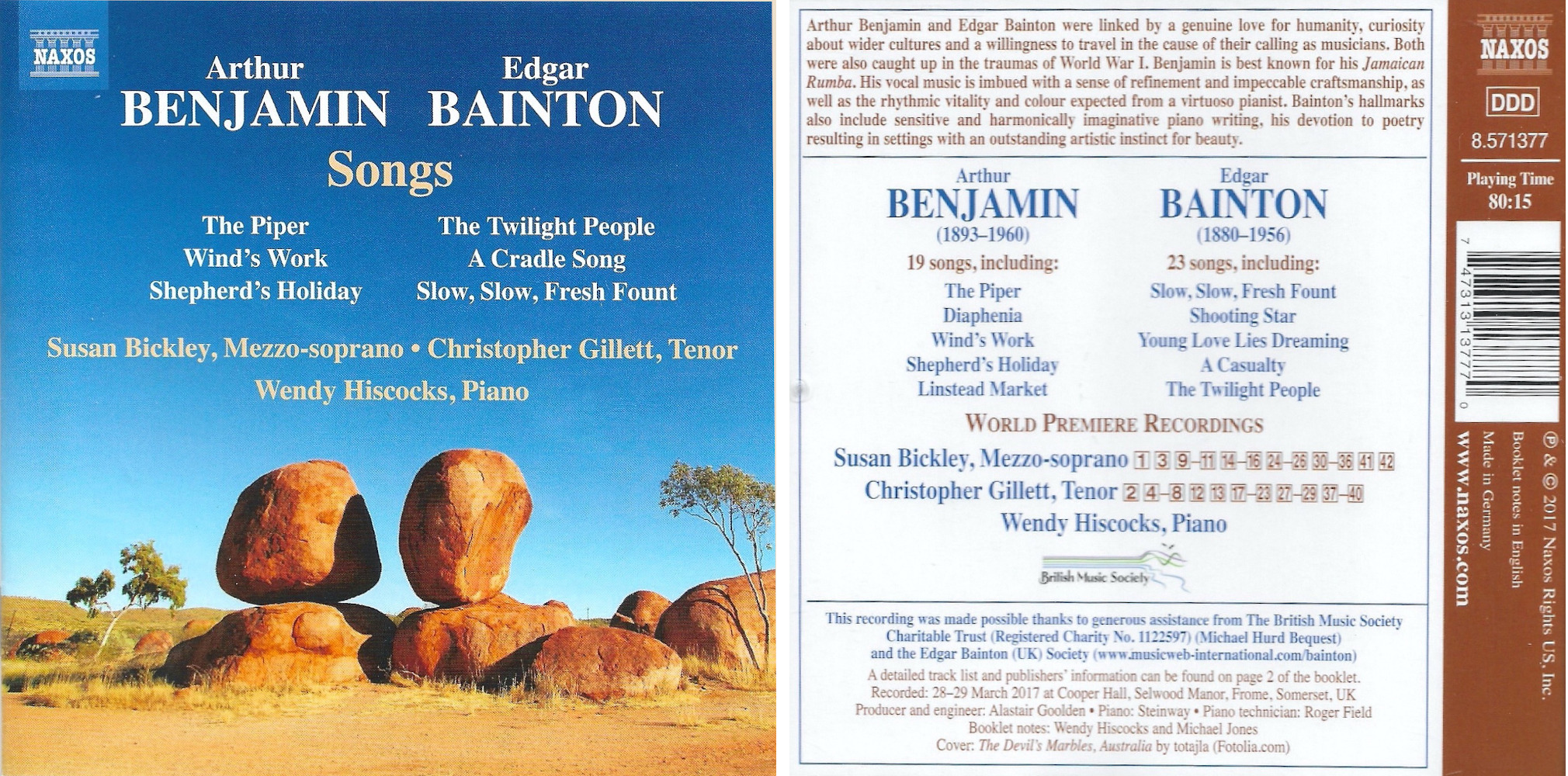
Benjamin, Bainton Songs (2017)
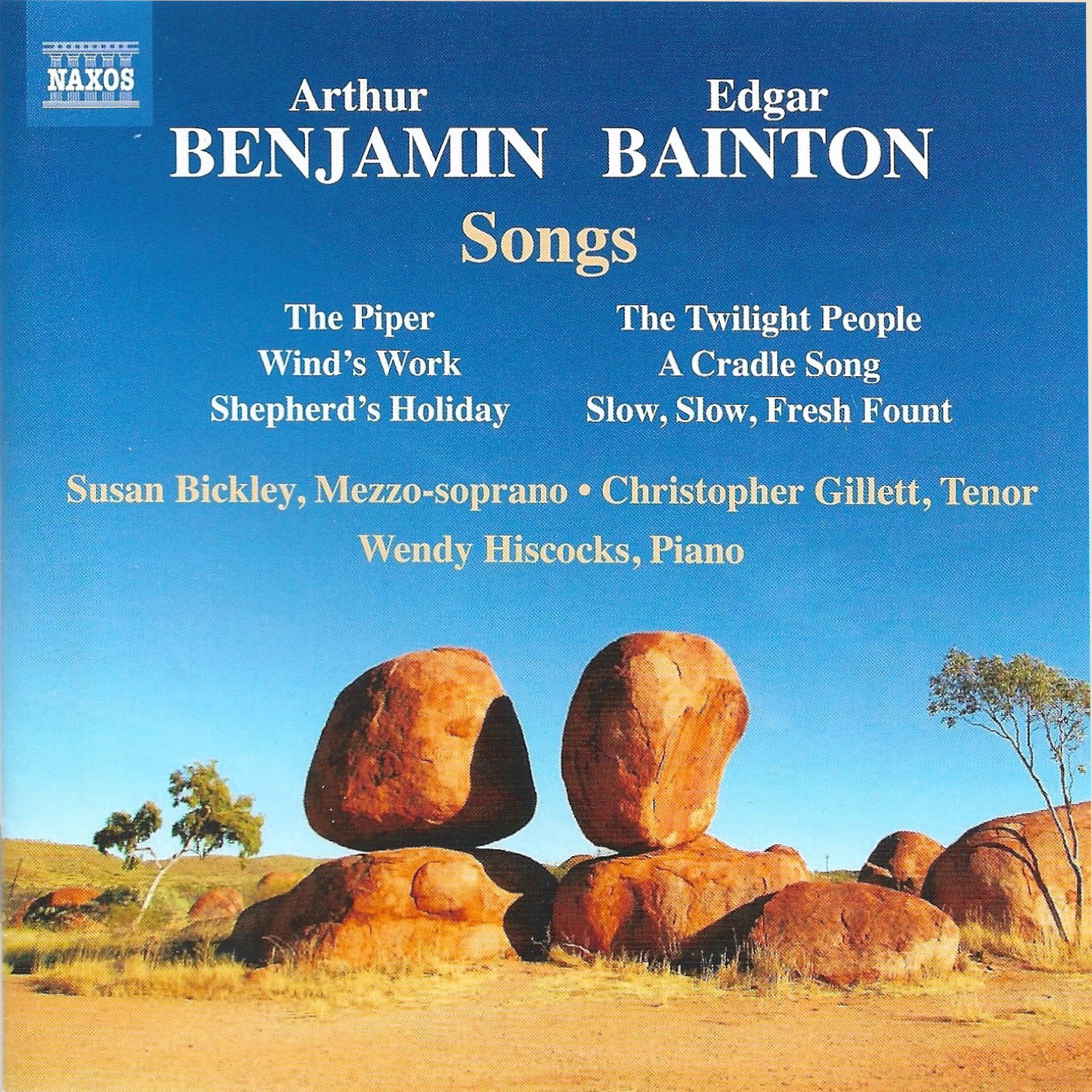
23 songs
with Susan Bickley (mezzo soprano), Christopher Gillett (tenor) and Wendy Hiscocks (piano)
Released in 2017 on Naxos, 8.571377
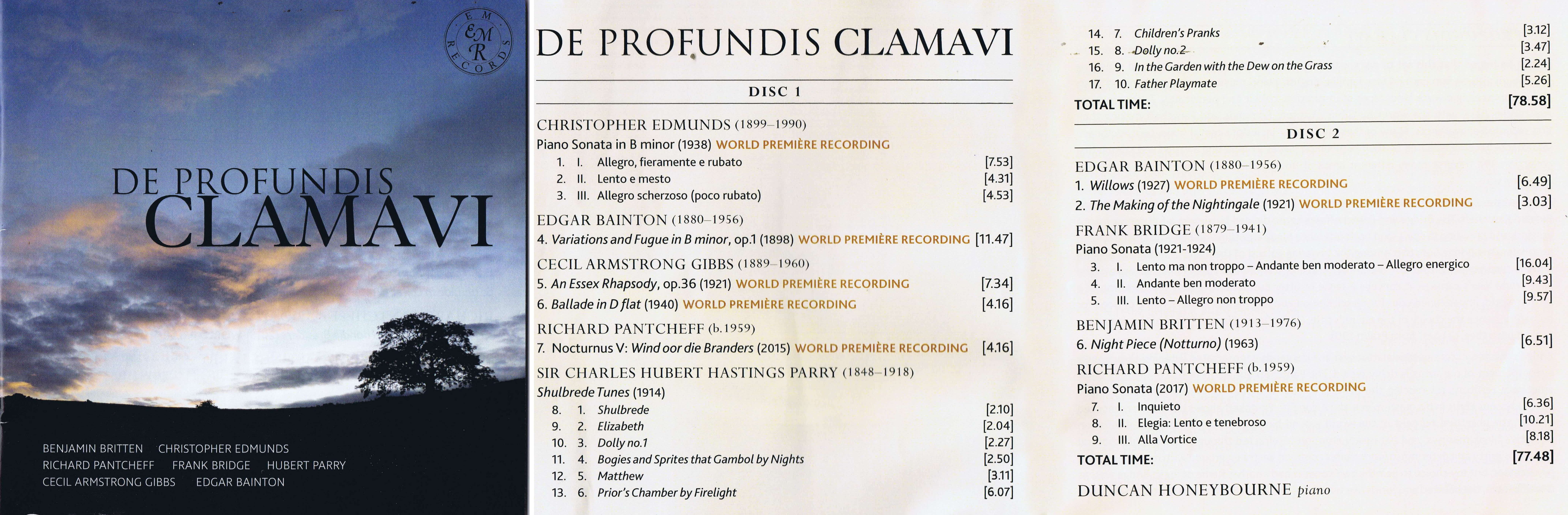
De Profundis Clamavi (2020)
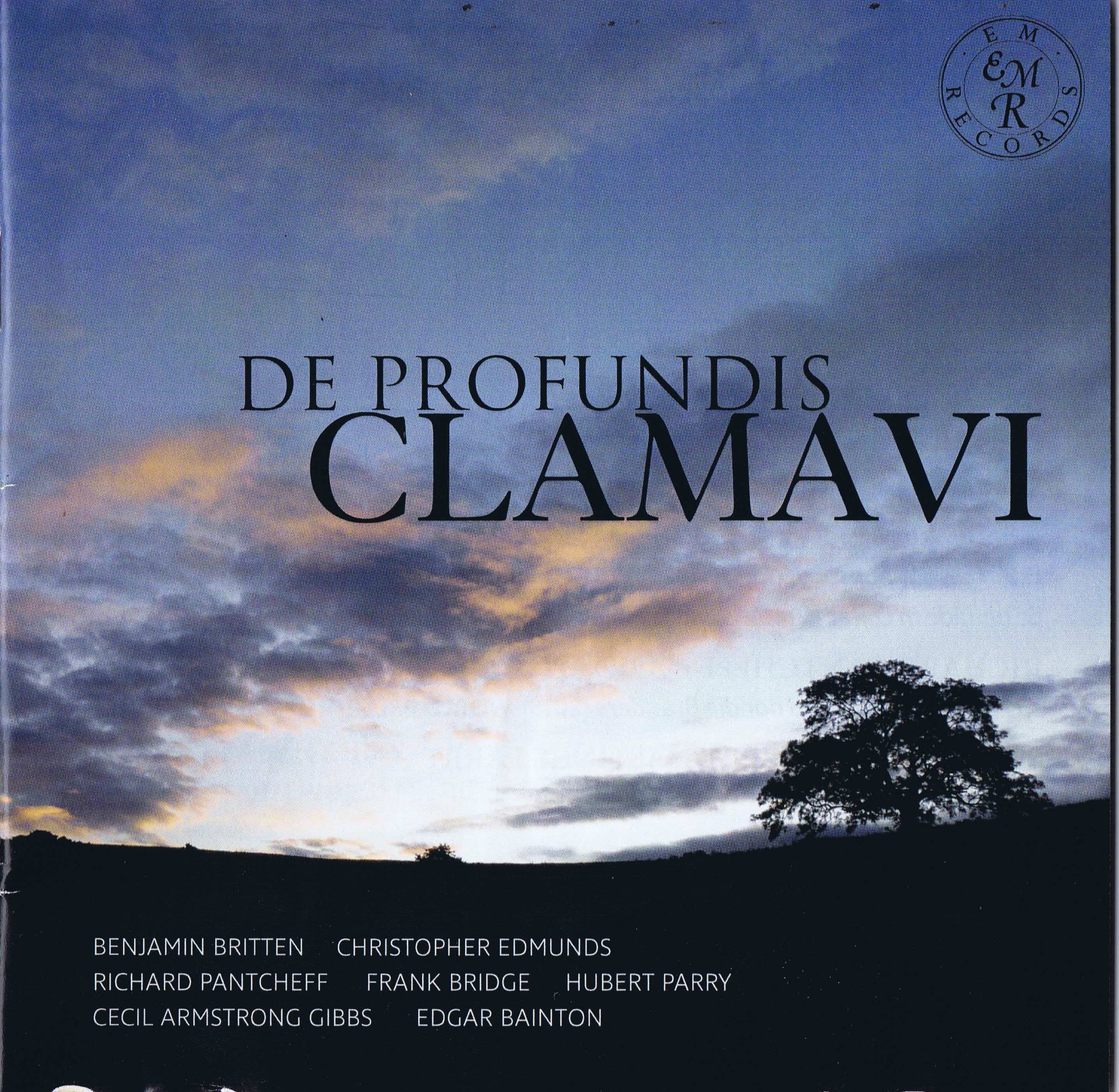
Piano Music: Variations & Fugue in B minor; Willows; The Making of the Nightingale
performed by Duncan Honeybourne (piano)
Released in 2020 on the EM Records label
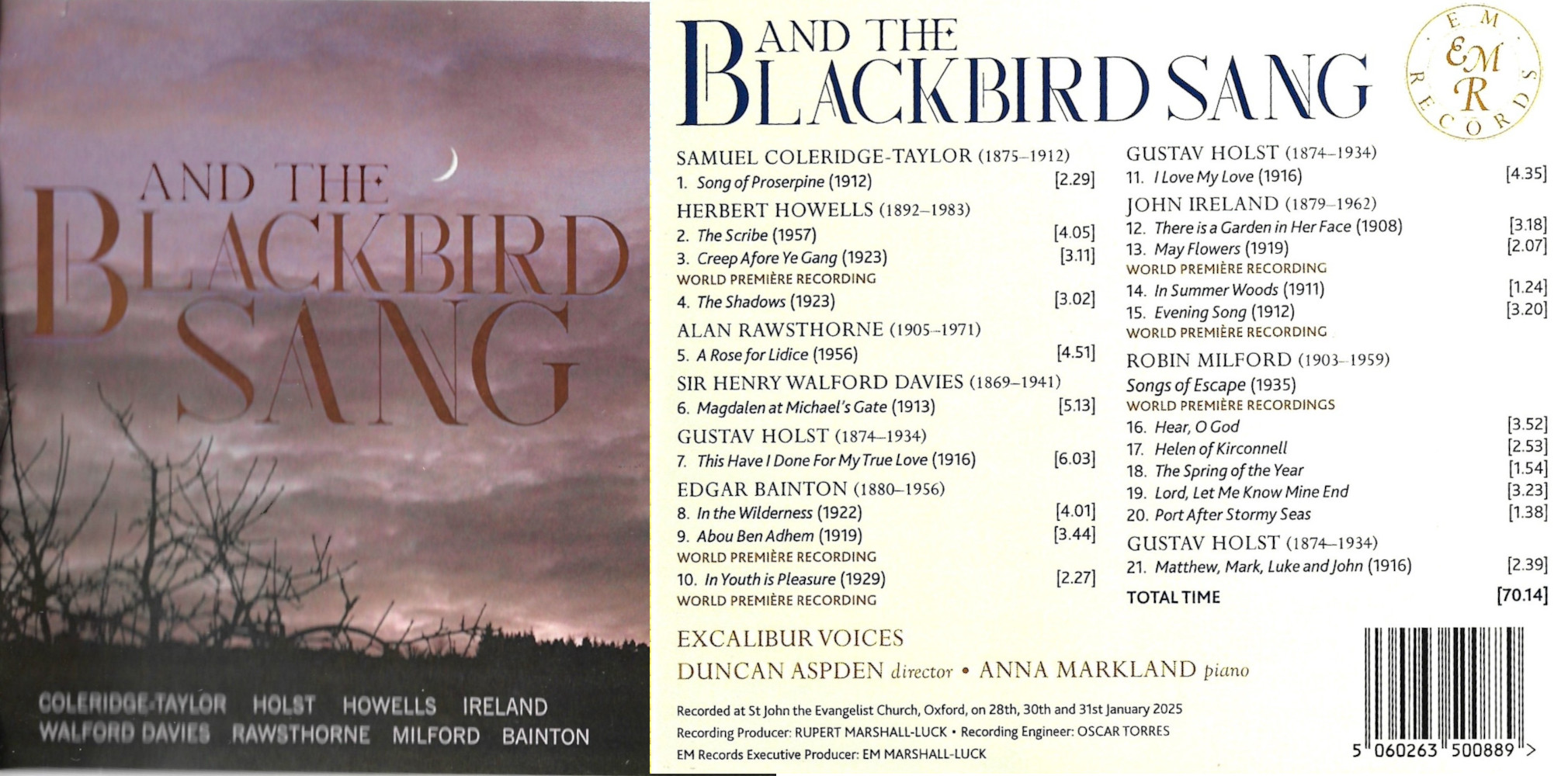
And the Blackbird Sang (2025)
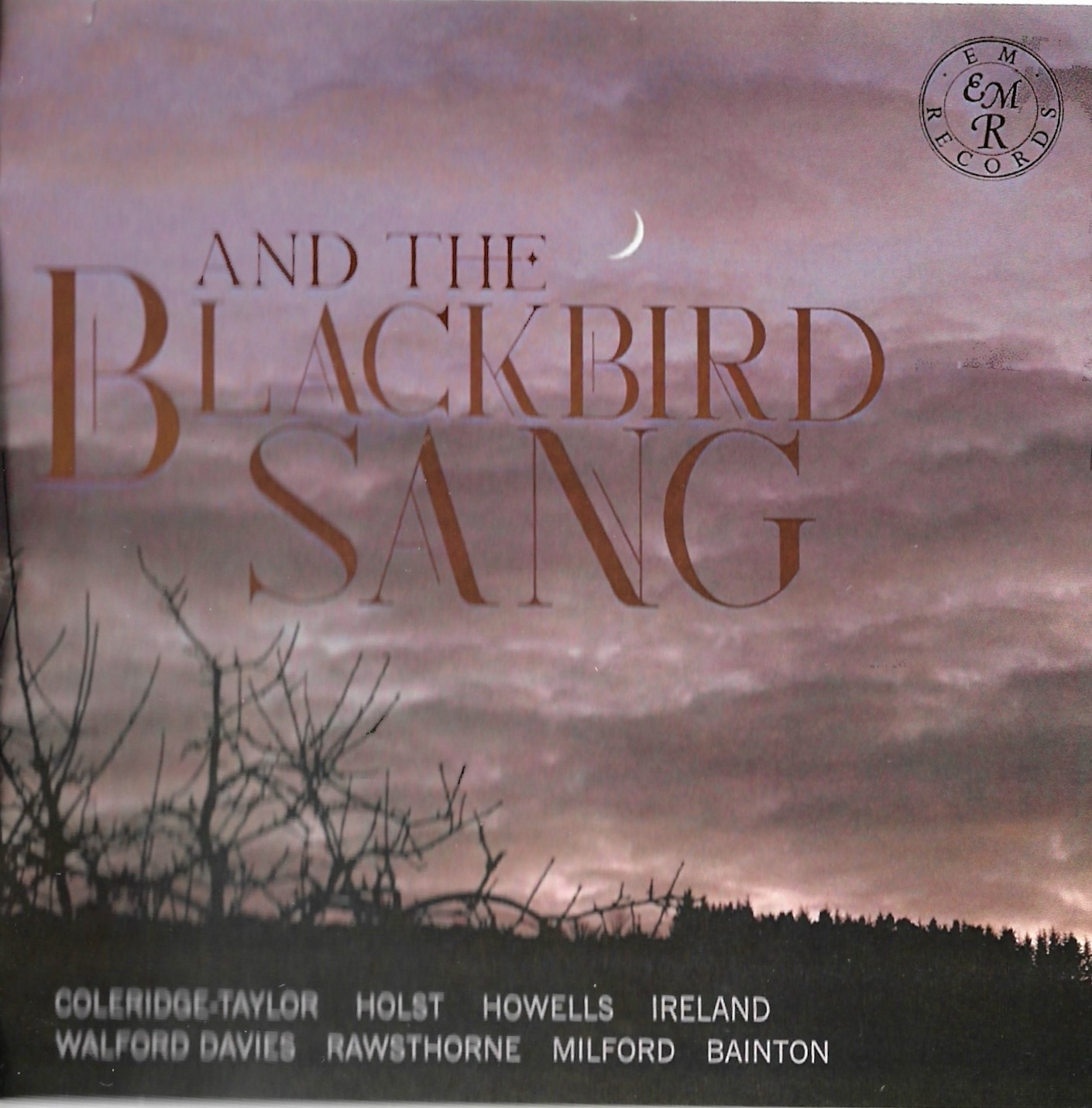
3 songs: In the Wilderness; Abou Ben Adhem; In Youth is Pleasure
with Excalibur Voices & Anna Markland (piano), under Duncan Aspden (Director)
Released in 2025 on the EM Records label